A picnic blanket and a beach blanket look like the same object until you take the wrong one to the shore. On grass, the enemy is damp coming up from below. On sand, the enemies are the sand itself, the wind, and the fact that everything you own ends up gritty by lunch. That is why a whole category of sand-free beach blankets exists, and why a plush cotton picnic rug is a poor choice for the beach. Understanding what makes these blankets different is the fastest way to buy one you will actually keep using.
What “sand-free” actually means
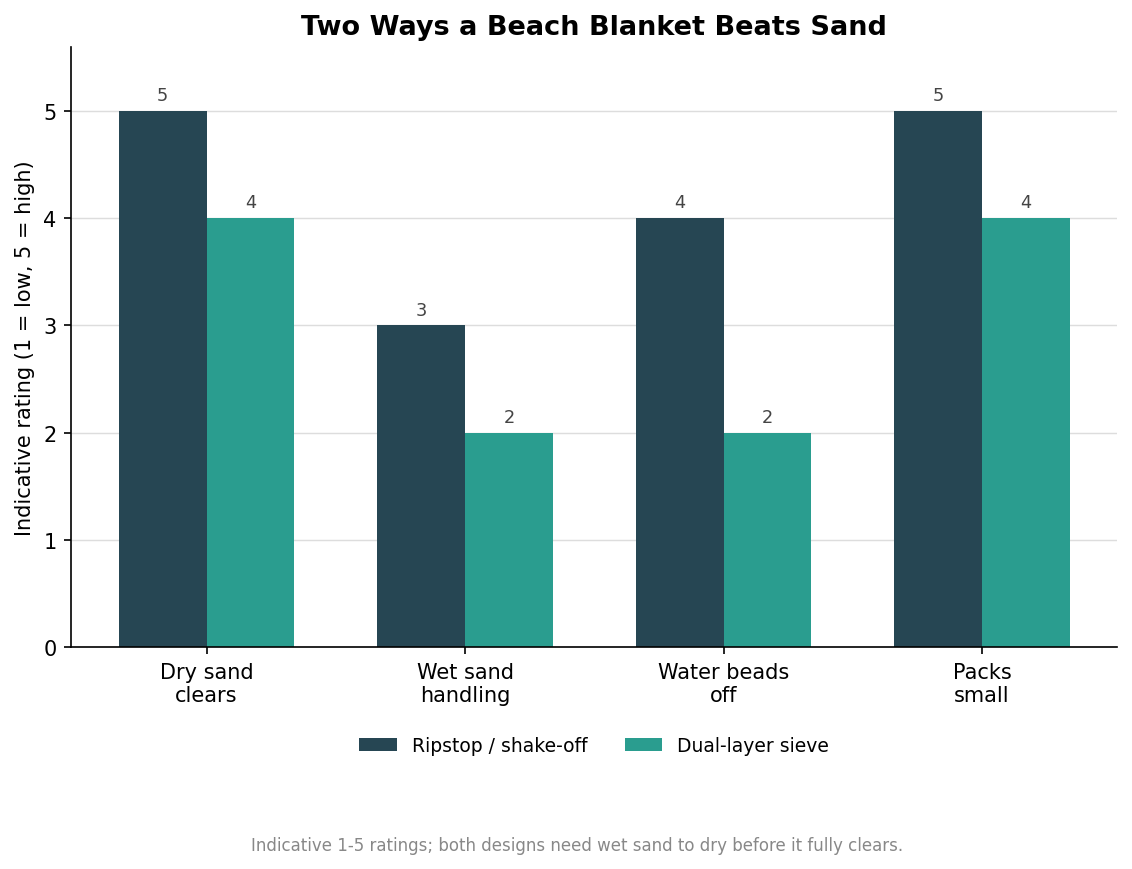
Two different tricks share the sand-free label, and it helps to know which one you are buying. The most common is a tightly woven ripstop or parachute nylon with a weave too fine for sand grains to embed and a slick surface sand will not cling to; the grains stay on top, and a quick shake or brush clears them. The second approach is a dual-layer sieve, where sand falls through an open top layer and a second layer stops it coming back up, so the grit ends up under the mat instead of on it. Both work well, with one shared caveat worth setting expectations around: dry sand clears in seconds, but wet sand has to dry before it will let go. Neither design is magic against a soaked, sandy towel dropped in the middle of it.
Size, and how small it packs
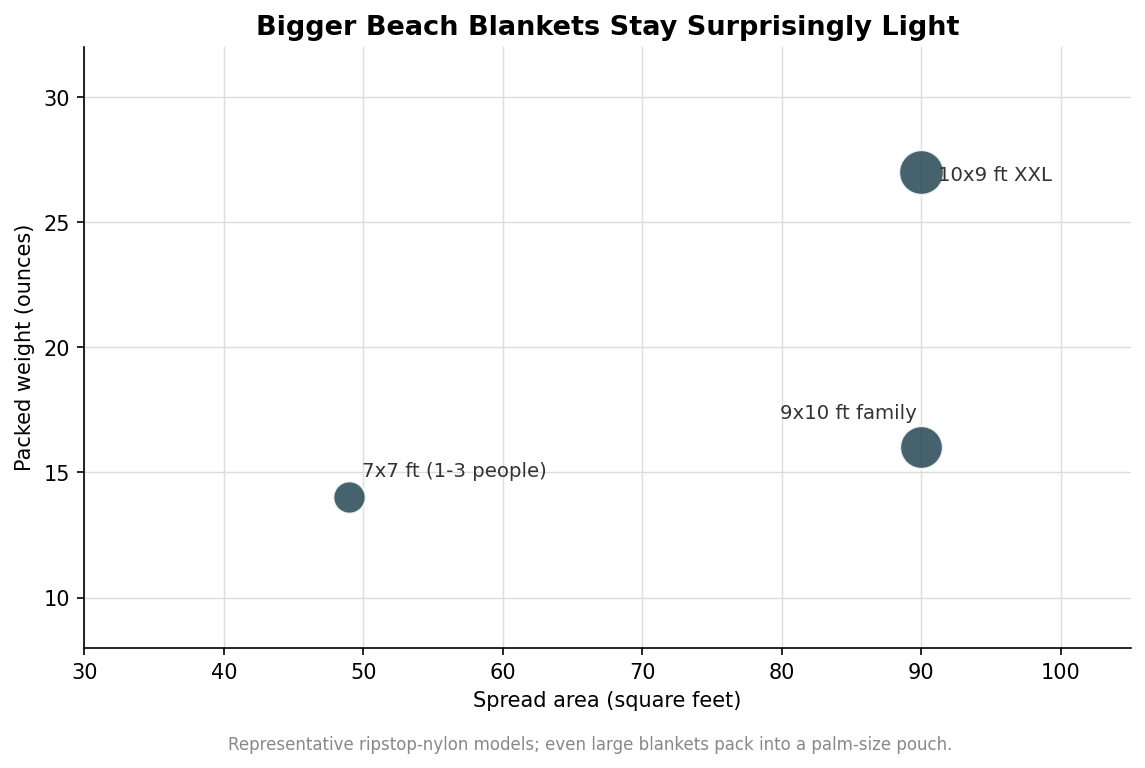
Beach blankets run larger than you might expect, because the point is to keep a group and its gear up off the sand. A compact blanket around 7 by 7 feet comfortably holds one to three people, while a family size in the 9 by 10 foot range covers roughly ninety square feet and is marketed for anywhere from two to eight adults, depending on how much gear rides along. The remarkable part is the weight: because the fabric is thin ripstop nylon, even a large blanket often weighs under a pound and packs into an attached pouch about the size of your palm. A compact model can come in around fourteen ounces, and a heavier XXL still lands under two pounds. That packability is the whole appeal, and it is why a nylon beach blanket beats a bulky woven rug for anything you have to carry across a parking lot and down a dune.
Keeping it on the ground
Wind is the failure mode nobody plans for. A light nylon blanket is a sail, and a gust will fold it over your lunch the moment you stand up. The fix is built into better blankets: four to six metal stakes and, more importantly, corner sand pockets you fill with sand before staking. The pockets do most of the work, weighing the corners down so the blanket stays flat even before the stakes go in, and the standard advice is to fill all four corners first and then add your gear. If you are choosing between two blankets, the one with real corner pockets and included stakes will outperform the one that relies on your cooler to hold it down.
Water, quick-dry, and the honest limits
Most sand-free nylon sheds water: drops bead up and roll off rather than soaking in, and the thin fabric dries fast after a rinse or a splash. That makes it forgiving of damp sand and the occasional wave. What it is not is a sealed vapor barrier, so if you are setting up on genuinely wet ground for hours, a little moisture can still work its way through, the same limit that separates water-resistant from fully waterproof gear. At the beach that is rarely a problem, because sun and breeze dry everything quickly, but it is worth knowing before you assume the blanket will keep you dry sitting on a soaked patch at low tide.
Caring for it so it lasts a few summers
Sand-free nylon is low-maintenance, but two habits keep a blanket usable for years rather than one season. First, rinse it with fresh water after a salty or muddy day; salt left in the fabric is what dulls colors and stiffens the hand over time, and a quick hose-down clears both salt and any embedded grit. Second, let it dry completely before it goes back in its pouch. The whole blanket packs down so small that it is tempting to stuff it away damp, but a wet blanket sealed in a tight sack is how you get mildew spots and a musty smell that is hard to remove. Air it out flat or over a railing, then pack it loose rather than cramming it, and skip a hot machine dryer, which can degrade the thin fabric and any water-shedding finish. Spot-clean stains with mild soap rather than scrubbing the whole thing, and it will keep beading water and shaking off sand season after season.
Customizing beach blankets for brands and events
Because the base fabric is polyester-family nylon, beach blankets take dye-sublimation printing beautifully, which is why they have become popular as branded summer gifts and event giveaways. Sublimation dyes the design into the fabric so it stays bright and does not crack or peel with sun, salt, and repeated folding, and it handles full-color artwork, photographs, and edge-to-edge patterns that a surface print cannot. For a resort, a festival, or a corporate summer gift, that means a large, eye-catching canvas people genuinely use. If you are ordering a run, design with the folding in mind, since a pattern that reads from any direction survives real-world use better than a single logo that only looks right one way up. Keep in mind, too, that custom textile orders carry minimum quantities and lead times that vary by supplier, so lock in artwork and confirm quantities and timing well before a seasonal deadline rather than the week before the event.