A custom picnic blanket earns its keep by sitting on wet grass, catching spilled drinks, and getting dragged across sand and mud, which means it will need cleaning, and cleaning is exactly where most waterproof blankets die. The heat and chemicals that make short work of an ordinary throw are the same ones that break down the waterproof backing that gives the blanket its whole reason to exist. This guide walks through how to clean a waterproof-backed picnic blanket so the coating survives, whether the mess is a single spill or a whole muddy afternoon, and it ends with how to store the blanket so it is ready for next time.
Why the backing is the fragile part
The top of a picnic blanket is usually a hard-wearing fleece, poly, or cotton face that tolerates normal washing. The underside is a thin waterproof layer, commonly a coated polyester or a film-backed laminate, and that layer is far more delicate than it looks. Heat softens and cracks it, harsh chemicals dissolve the bond between coating and fabric, and aggressive mechanical action can flex it until it flakes. Every rule that follows is really a single idea in different clothes: be gentle with the coating, because once it is compromised the blanket is just a fabric that soaks through.
Read the care label before anything else. Manufacturers know what their specific coating tolerates, and a label instruction always overrides general advice. If the label says spot clean only, believe it; some backings are not built to survive a full wash at all. The guidance here is the sensible default for a typical waterproof-backed blanket, not a license to ignore what the maker printed on the tag.
Everyday spills: blot, spot clean, move on
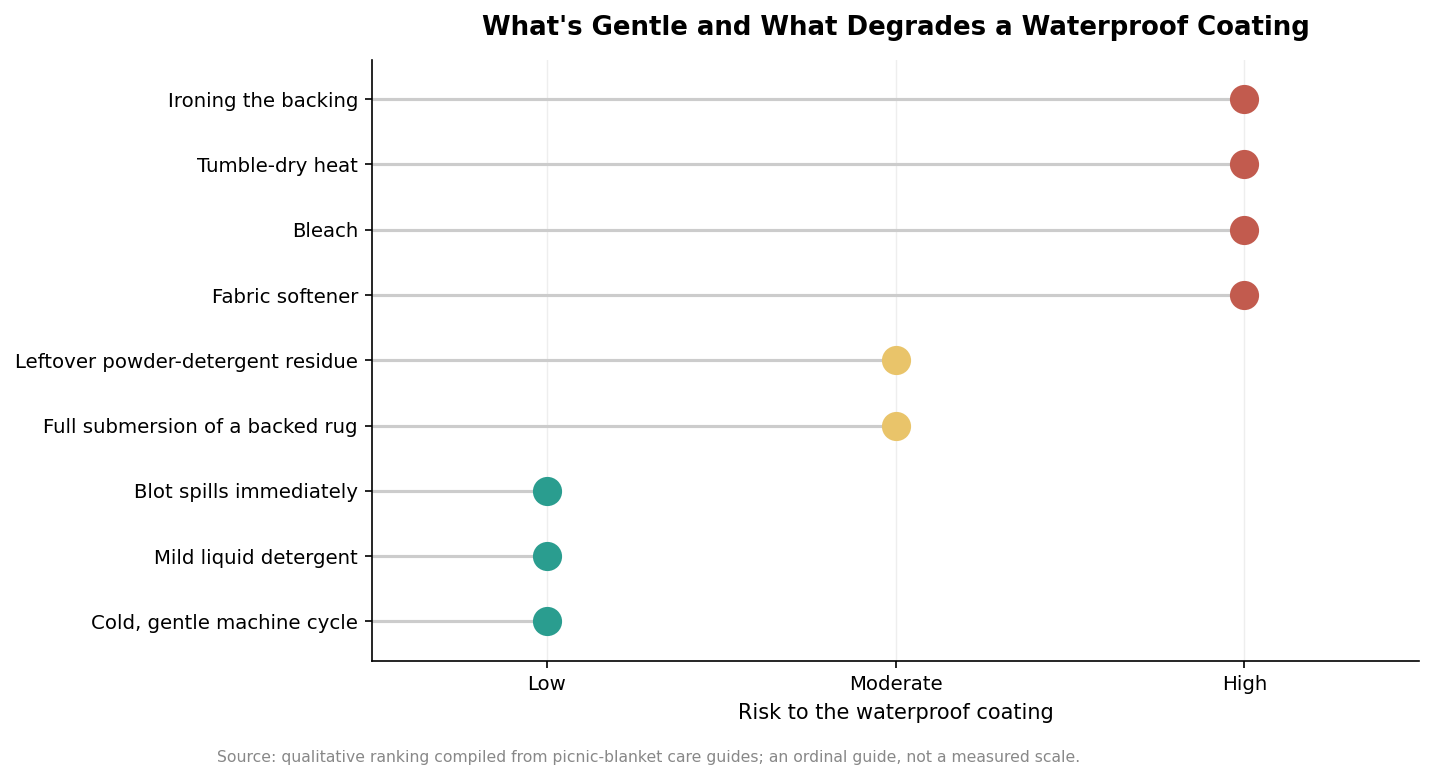
The best cleaning is the cleaning you do immediately. When something spills, blot it with a clean cloth right away rather than rubbing it in, because a drink lifted off the surface in the first minute never becomes a stain you have to fight later. For a stubborn mark, a paste of baking soda and a little water, left on for around fifteen minutes and then rinsed with cold water, lifts a surprising amount without any harsh chemistry. Oily food stains respond to a small amount of dish soap or a gentle degreaser worked in and rinsed clear.
For a blanket that only picked up a little surface dirt, you often do not need to wash the whole thing. Wiping the top and the backing with a damp cloth handles light grime and keeps the coating away from the stress of a full wash cycle. Reserving full washes for when the blanket is genuinely dirty is the single easiest way to make the waterproofing last for years rather than seasons.
A full wash without wrecking the coating
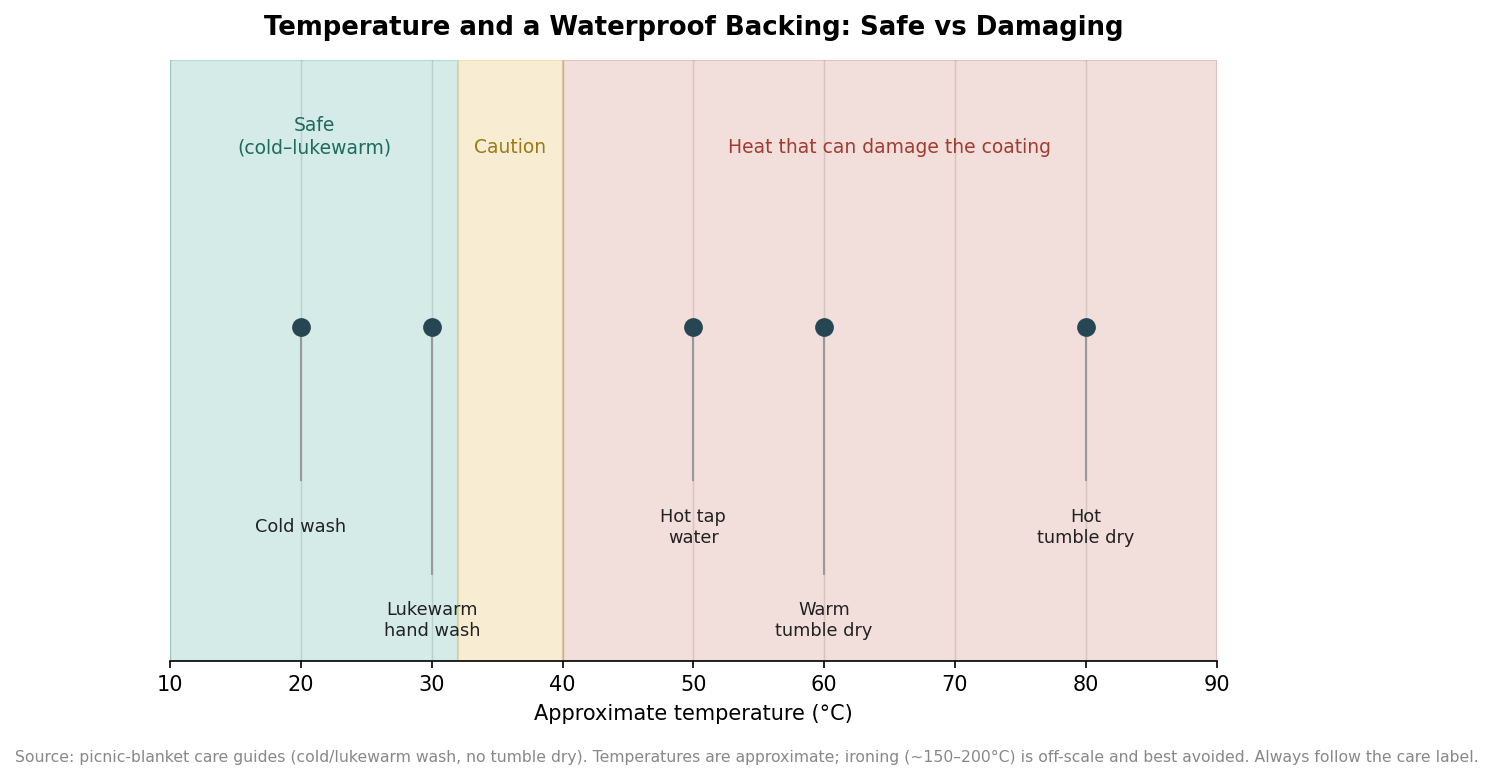
When the blanket does need a proper clean, temperature is the decision that matters most. Wash in cold or lukewarm water on a gentle or delicate cycle with a low spin, and use a mild liquid detergent rather than a powder, since undissolved powder can leave a residue that works against the coating. The two products to keep well away are bleach and fabric softener; both are known to break down waterproof materials, and softener in particular leaves a film that undermines water repellency.
If you would rather not machine wash, hand washing is gentler still. Fill a basin or tub with lukewarm water and a small amount of mild detergent, let the blanket soak for fifteen to twenty minutes with light agitation, and then rinse thoroughly until no soap remains. Some waterproof-backed rugs should not be fully submerged at all, so if the label warns against it, stick to wiping the surfaces rather than dunking the whole blanket.
Drying is where good blankets get ruined
Never put a waterproof-backed blanket in a tumble dryer. Dryer heat is more than enough to soften, crack, or delaminate the coating, and it is the most common way a perfectly good blanket is destroyed in a single afternoon. The same logic rules out ironing the backing, which concentrates far more heat in one spot than any coating can take. Instead, hang the blanket in a well-ventilated spot out of direct sunlight and let it air dry completely, since prolonged sun exposure fades printed designs and can degrade the fabric over time.
Drying completely is not optional, because a blanket packed away even slightly damp is a blanket that develops mildew and odor in storage. Make sure both the top face and the waterproof underside are fully dry before you fold it up, giving the backing particular attention since moisture can hide against that smooth surface.
Store it so it is ready next time
How you put the blanket away shapes how it performs when you next unroll it. Rolling rather than tight folding avoids pressing hard creases into the backing, and repeated sharp folds along the same lines are exactly where a coating eventually cracks and starts to leak. Keep the rolled blanket in a cool, dry place away from direct sunlight, and give the backing one last check for damp patches before it goes into a bag for the season.
None of this is demanding, and that is the point. Cold water, mild liquid detergent, no bleach or softener, air drying, and a loose roll for storage are a short list that any custom picnic blanket owner can follow, and together they are the difference between a blanket that stays genuinely waterproof for years and one that quietly gives up after a hot wash and a spin in the dryer.